

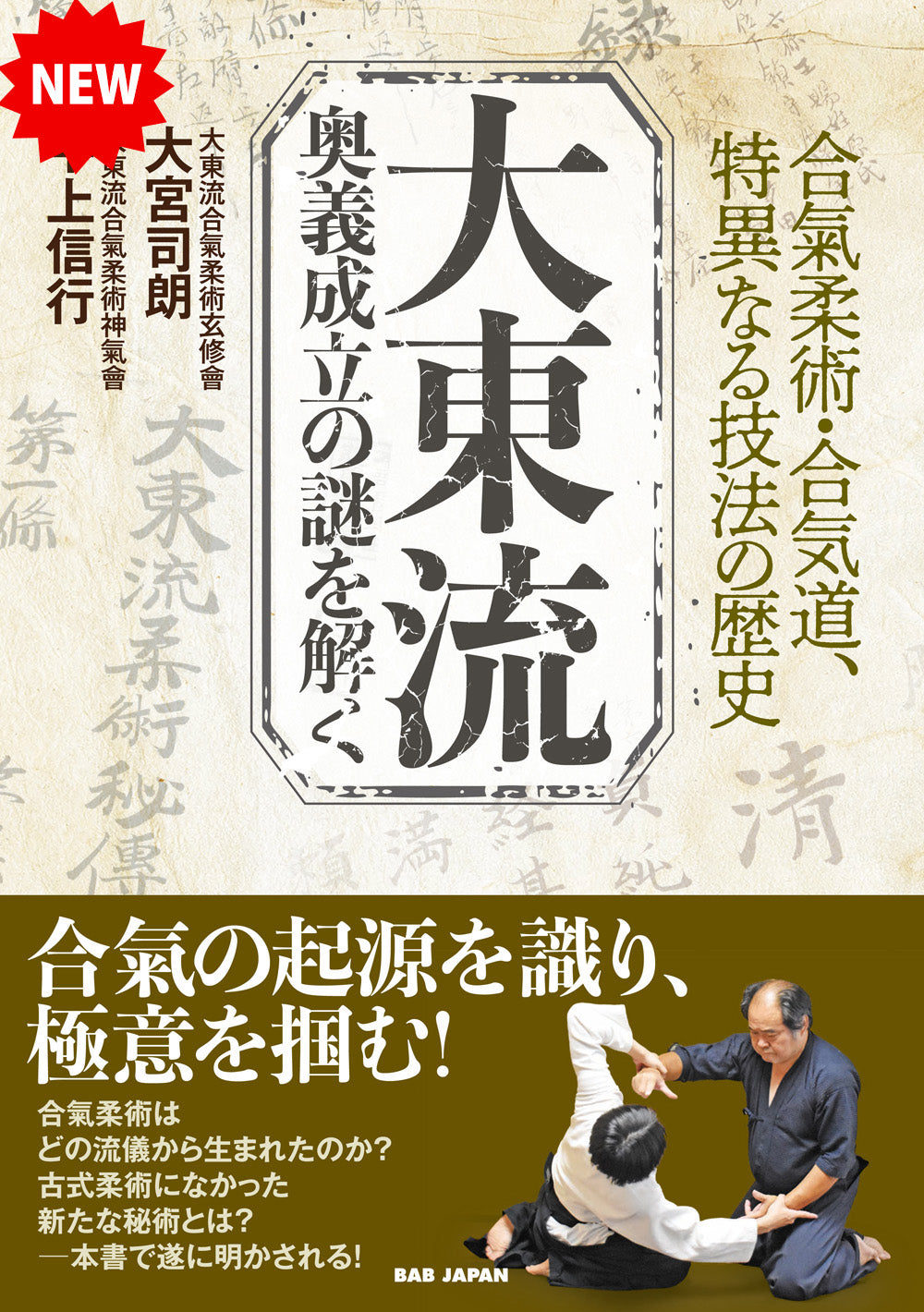
Unraveling the Mystery Behind the Creation of Daito Ryu's Secret Techniques Book by Shiro Omiya & Nobuyuki Hirakami
THIS IS A SPECIAL ORDER ITEM
These items can take approximately 1-2 weeks to arrive here before they are ready to be shipped out by the selected courier service. Special order items are not eligible for return or exchange under any circumstances. Please review product details carefully before adding these items to your shopping cart.
Please Note: If you place an order for other items, they will be held and shipped together with the special order item when it is available. Alternatively you can place separate orders so your regular items will be shipped sooner.
A History of Aiki Jujutsu and Aikido: Extraordinary Techniques and Their Development
Unlock the origins of Aiki and grasp its essence.
Where did Aiki Jujutsu originate?
What new hidden techniques emerged that did not exist in older jujutsu traditions?
This book finally reveals the answers.
Two leading experts in classical jujutsu practice and research trace the roots of Aiki Jujutsu—one of the most refined traditions in Japanese martial arts.
Based on reliable historical sources, they bring clarity to the mysterious formation of these techniques.
Contents
- Chapter 1: The technical system of Aiki Jujutsu and the secrets of its formation
- Chapter 2: The hidden structure behind the “Secret Transmission Catalog”
- Chapter 3: The advanced transmission techniques of Daito-ryu in the Meiji era
- Chapter 4: The instructors of Daito-ryu during the Meiji period
- Special Feature: The achievements of Master Kanji Shimazu in Daito-ryu research
A long-awaited collaborative work by two authorities in spiritual martial arts research and classical bujutsu studies.
Presented in a dialogue format that brings hidden knowledge to light.
A must-read for all Aikido practitioners.
CONTENTS (Detailed Overview)
Chapter 1: The formation of the Aiki Jujutsu technical system
How was the technical system of Aiki-based martial arts formed?
- Column: What classical martial arts did Master Ueshiba actually study?
- “A Light in the Darkness”
- On the teaching systems of various Aiki-jujutsu schools
- Column: On old and new character usage in step-based progression and technical catalogues
- The first crossroads
- Column: The Zen koan “Zhaozhou’s Dog” and the essence of martial arts enlightenment
- Research by Master Teruzui Tsuruyama
- Achievements of Master Tsuruyama
- The essence of the “Daito-ryu Jujutsu Secret Transmission Catalog”
- The difference between “118 techniques” and “118 forms”
- Comparative study of transmission scrolls
Chapter 2: The secret structure behind the “Secret Transmission Catalog”
- On the design of Daito-ryu transmission documents
- Why 118 techniques?
- The existence of foundational entry techniques before formal kata study
- Mathematical structure and calculation systems
- Secret written kata manuals
- Column: Types and classification of traditional martial transmission scrolls
- Teaching content of the Secret Transmission Catalog
- Reconstruction of the Daito-ryu Secret Transmission Catalog
- Why ineffective-looking techniques matter
- Transition into technique-centered training
- Column: The mystery connection between Ryukyu ancient boxing and Daito-ryu
Chapter 3: Advanced transmission techniques in Meiji-era Daito-ryu
- Advanced sections of the Secret Transmission Catalog
- “Ninin Zume no Koto” (dealing with two attackers)
- Column: “The technique of the wealthy lord”
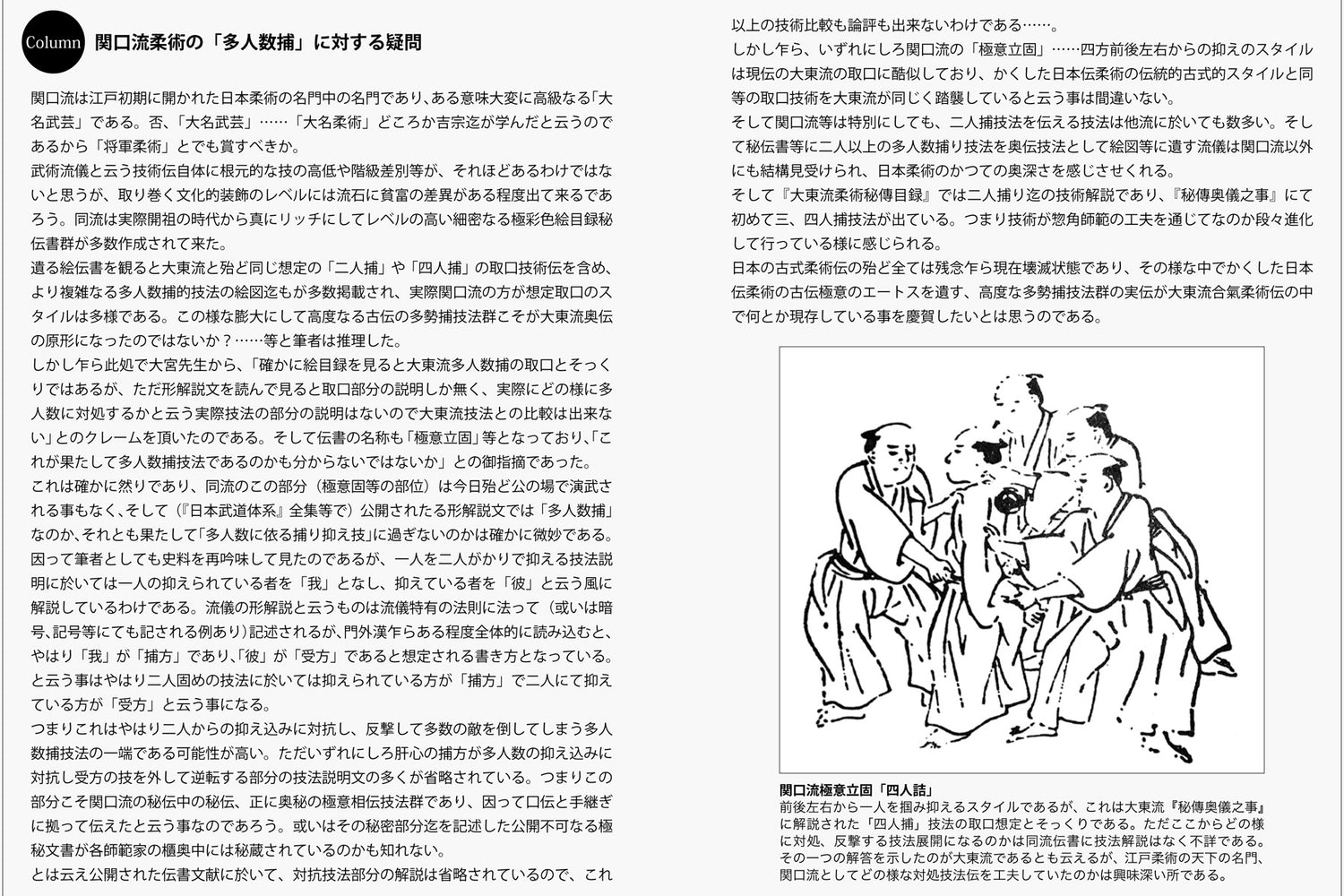
- Column: Spread of Sekiguchi-ryu in Edo
- Column: Questions surrounding multi-opponent capture techniques
- “Kasa Tori no Koto” (umbrella-taking techniques)
- Column: The history and meaning of rain gear among samurai (Part 1: Kojima Takanori legend)
- Column: (Part 2: Ota Dokan and the yamabuki flower legend)
- “Capturing the tsuba of a sword worn at the belt”
- Column: The ultimate secret of martial arts
- Secrets of the “Secret Advanced Transmission Techniques”
- Column: Transition periods in early transmission scrolls
- Column: “Staff” or “stick”?
- Development methods and stage transitions in technique transmission
- Column: The “Reverse Slope at Hiyodorigoe”
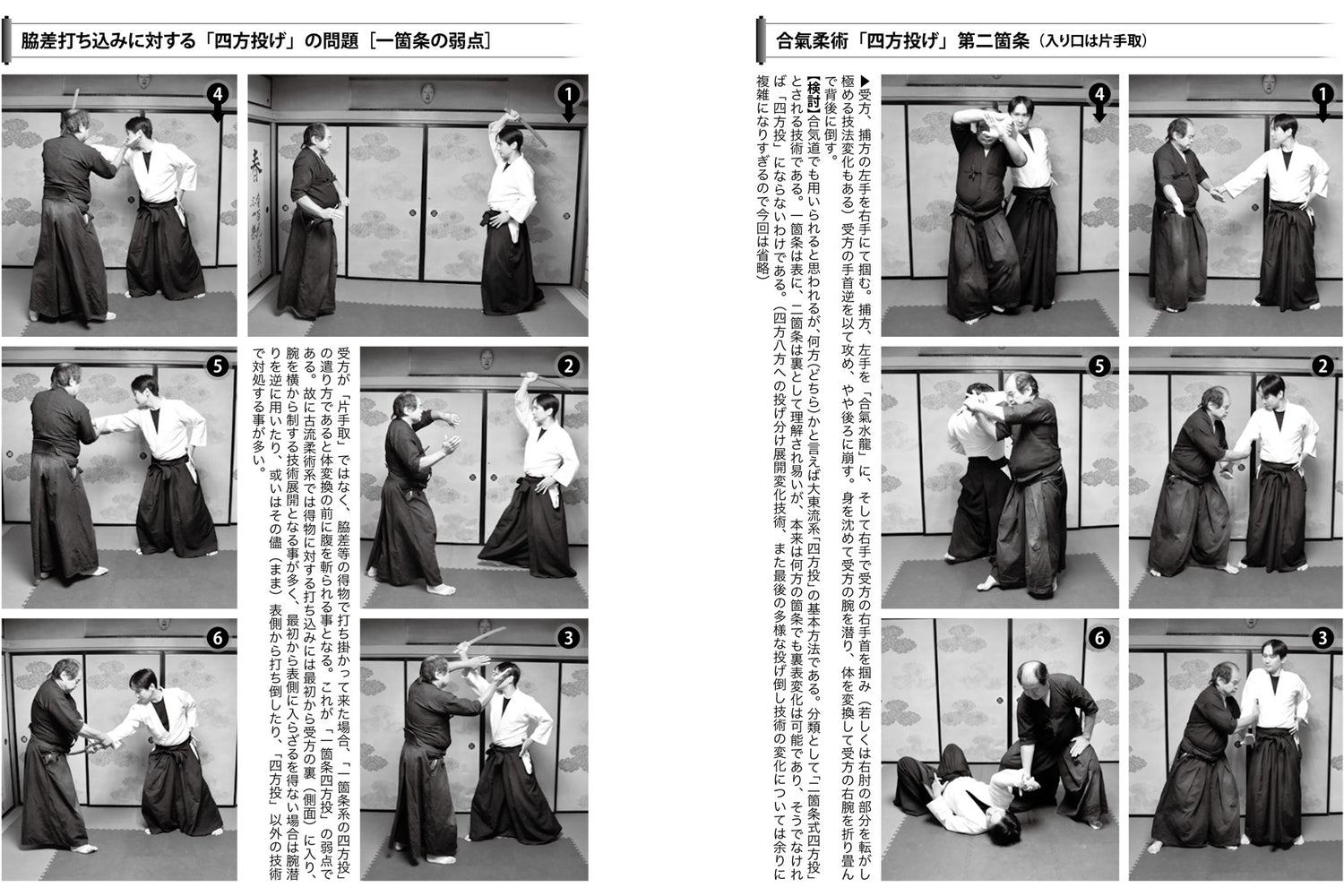
- The completed form of “Shihonage”
- Secret techniques in the Advanced Transmission section
- Overview of Meiji-era Daito-ryu
- Actual teaching methods of the period
- Column: The truth about Master Kawamata Kozo
- Column: Difference between “technique” and “form”
- The essence of Meiji-era Daito-ryu transmission
Chapter 4: The instructors of Meiji-era Daito-ryu
- Transmission from Master Kanji Sato
- Contents of Sato’s “Women’s Self-Defense Techniques”
- Column: The truth of Sato Kanji’s training
- Column: Practical application of techniques in his 1917 book “Women’s Self-Defense”
- Column: The surprising essence of “tehodoki” in Shinto Isshin-ryu
- The complete system of 30 women’s self-defense techniques
- On the Onodera family documents
- Establishing facts through accumulation of evidence
- Was the term “Aiki” used in Meiji-era Daito-ryu?
- Column: The essence of “Hakushu Kote-gaeshi” (Part 1: secrets of ancient divine martial techniques)
- Column: (Part 2: the mystery of finger gun techniques)
- The mystery of how the term “Aiki” was introduced
- Summary of Meiji-era Daito-ryu research
- Diversity of classical training methods
- What makes Daito-ryu unique compared to other schools?
Chapter 5: Special dialogue edition — In memory of Kanji Shimazu
- The great achievements of Master Shimazu, who uncovered foundational Daito-ryu sources
- Visit to Master Muto Masao’s home before the launch of “Hiden”
- Column: A turning point in classical Daito-ryu research
- Column: Martial arts materials preserved by the Muto family
- Column: A research journey to Aizu
- Column: The nature of early large-scale Daito-ryu transmission scrolls
- Column: Dojo signboards of early masters
- Shin’gan-ryu Kenjutsu
- Column: On the authors’ two esoteric weapon traditions
- Tenguden sword art “Tsuka-Saya Secret Technique”
- Column: The relationship between classical Daito-ryu, swordsmanship, and the secret of the half-sheathed wooden sword
Authors
Shiro Omiya
From early childhood, Omiya has studied spiritual sciences and classical Shinto practices, visiting sacred sites and mountains across Japan to refine spiritual perception and connection. He is a leading figure in modern esoteric studies, well-versed in ancient Shinto and ritual traditions. In addition to teaching Daito-ryu Aiki Budo, he leads the Gengaku Shugyokai and Daito-ryu Genshukai. His publications include “Instant Spiritual Training Course” (BAB Japan) and “Dialogue: The Secret Teachings of Aiki and Martial Essence” (co-authored with Hirakami, Hachiman Publishing), among many others.
Nobuyuki Hirakami
A researcher of Japanese martial history and Edo-period technical systems, as well as a martial arts novelist. His major works include “Secret Techniques of Classical Jujutsu,” “Combat Theory of Classical Jujutsu,” “Secrets of Master Transmission (Volumes 1–2),” and “Dialogues on Ancient Shinto and Classical Martial Arts.” His fiction includes “Martial Arts Secret Stories (Volumes 1–2),” “The Great Warrior: Confucius Martial Chronicle,” and “The Divine Musashi Yoshitsune.” He has also written extensively on sword fittings and historical analysis, including “The Secrets of Fairy Tales.” He is the co-author of “Dialogue: The Secret Teachings of Aiki and Martial Essence.”
He currently lives in Takao, Hachioji, where he leads the Mikatuchikai, a school dedicated to classical Japanese sword arts, preserving traditional martial culture in the region.
Length: 316 pages
Language: Japanese
mbomi2
Couldn't load pickup availability