

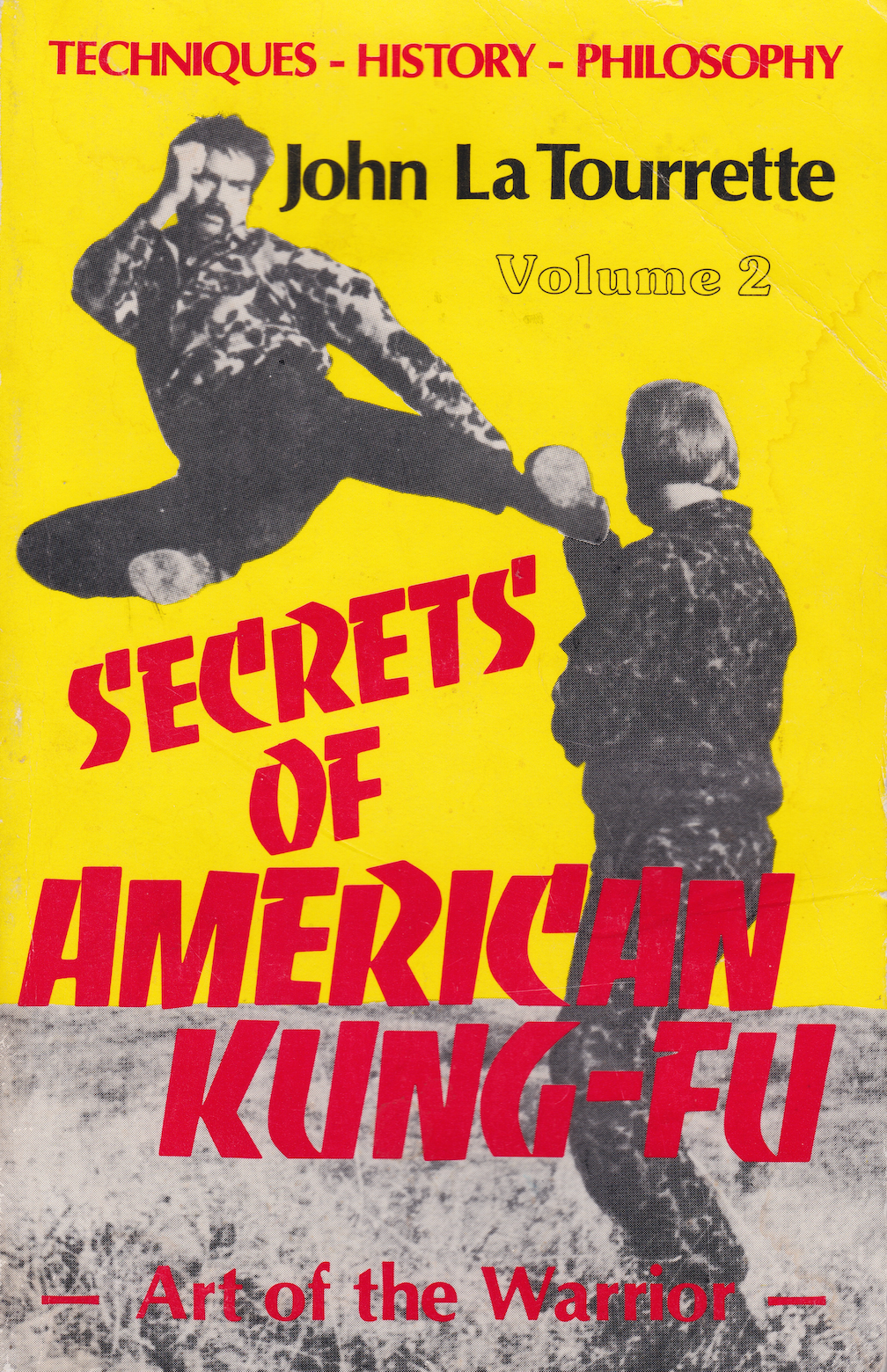
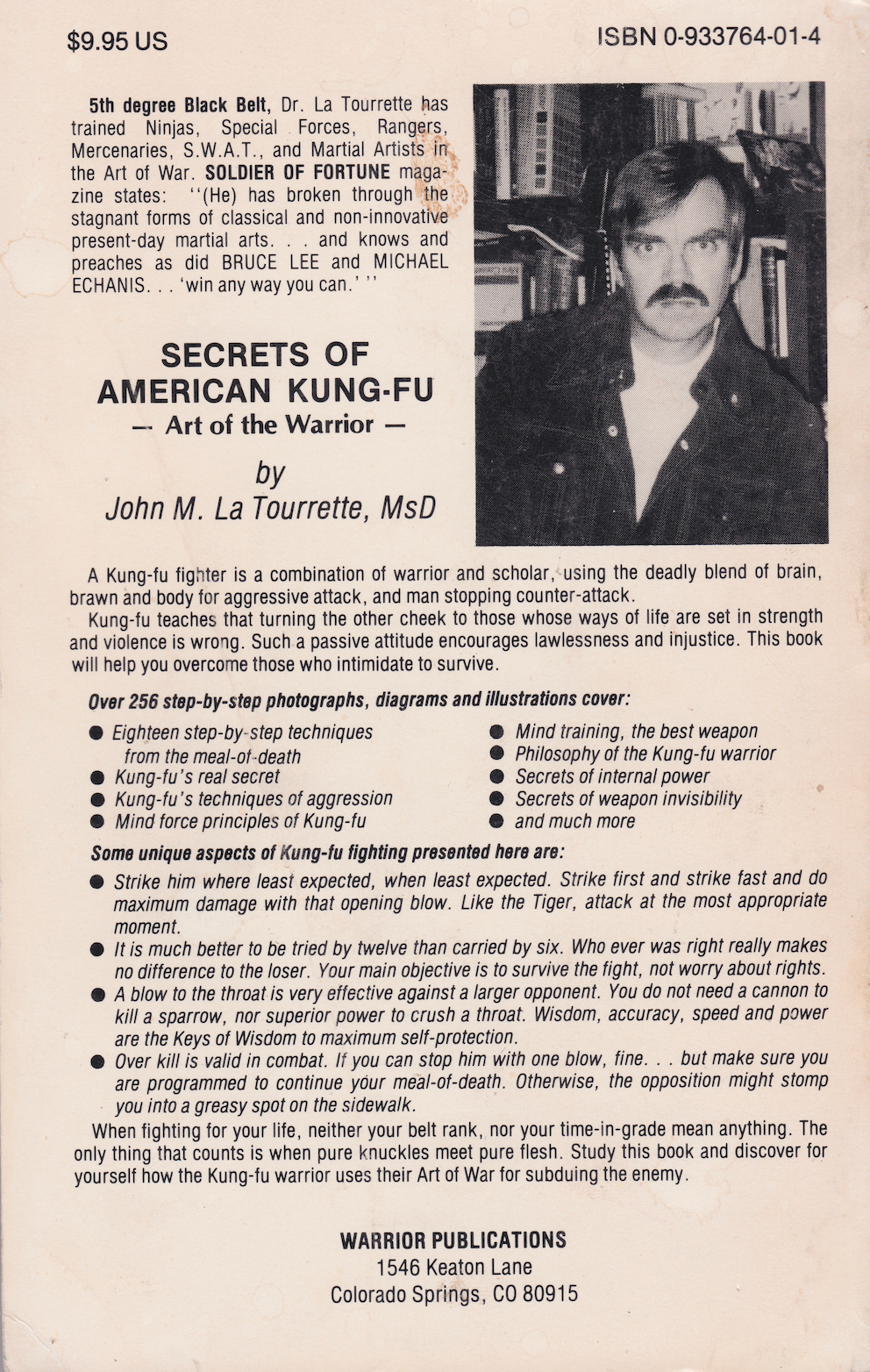
Secrets of American Kung-Fu: Art of the Warrior Book by John La Tourrette (Preowned)
TABLE OF CONTENTS
I. THE SECRET PATH
Purpose of a Leader
The Goal of Practice, Study and Meditation
The Occult Science Regards Kenpo Karate
The Real Secret
The Secret Barrier
Purpose of this book
II. PHILOSOPHY OF THE KUNG-FU WARRIOR
Ed Parker's Kenpo Creed
Mr. La Tourrette's Self Defense Creed
Real purpose of Self Defense
Non violent end to violence
SALUTATION
Original meaning
Present day significance
Critical distance
Eyes for awareness
III. EVOLUTION OF KENPO KARATE
General history
India roots
Daruma
Chinese roots
The Dragon, Tiger, Leopard, Snake, Crane
Delayed death touch
Okinawa's influence
Choki Motobu
James Mitose
William Chow
Ed Parker
John La Tourrette
IV. MIND TRAINING – THE BEST WEAPON
External awareness
Color code of Combat
Blind Master Po
Mental vision
Bugei vs Budo
V. THE ZONES OF MOVEMENT
The clock system
How to move for defense How to move for attack
How to evade and counter-attack
Probable evasion zones
Probable hit zones
Zones of aggression
Size vs. directional movement
Straight attack
Circular attack
VI. THE QUADRANTS FOR DEFENSE AND OFFENSE
The three general sections
Six sub-sections
Centerline
Appetizer targets
Target areas covered in this book
Outline of the twenty quadrants
VII. KENPO'S COUNTER ATTACK
The why of Kenpo self defense
Hammerlock
Kimono grab
Four fists
Delayed sword
Sword of Destruction
Aggressive twins
Rising elbow
Cutting the pagoda
Spear of jade
Three winds claw
Clawing panther
Two headed serpent
VIII. KENPO'S TECHNIQUE OF AGGRESSION
Leopard movement push-step drag
Snake movement front crossover
Dragon movement rear crossover
Crane movement step-kick-step through
IX. TECHNIQUES FOR MAJOR BODY CONTROL AND PERFORMANCE
Blocking Set
Short form 1
X. KICKING LINE FOR SINGLE POINT BALANCE
360 defense and attack
Tan Tien balance point
Lower Limit of practice
XI. ETIQUETTE OF THE KENPO WARRIOR
Respect and its ritual
Studio dress code
Proper attitude
Cleanliness code
XII. CHOOSING A KARATE SCHOOL
The many choices
Step one
Who to inquire of How to arrange an interview
Politeness goes both ways
Questions to ask of the instructor
Questions a good instructor will ask prior to your acceptance
Credentials
Costs
Know your own goals
XIII. ORIENTAL TERMINOLOGY
Role of oriental vocabulary
Number systems
Most common terms required
BIBLIOGRAPHY
Length: 135 pages
Publication date: 1981