

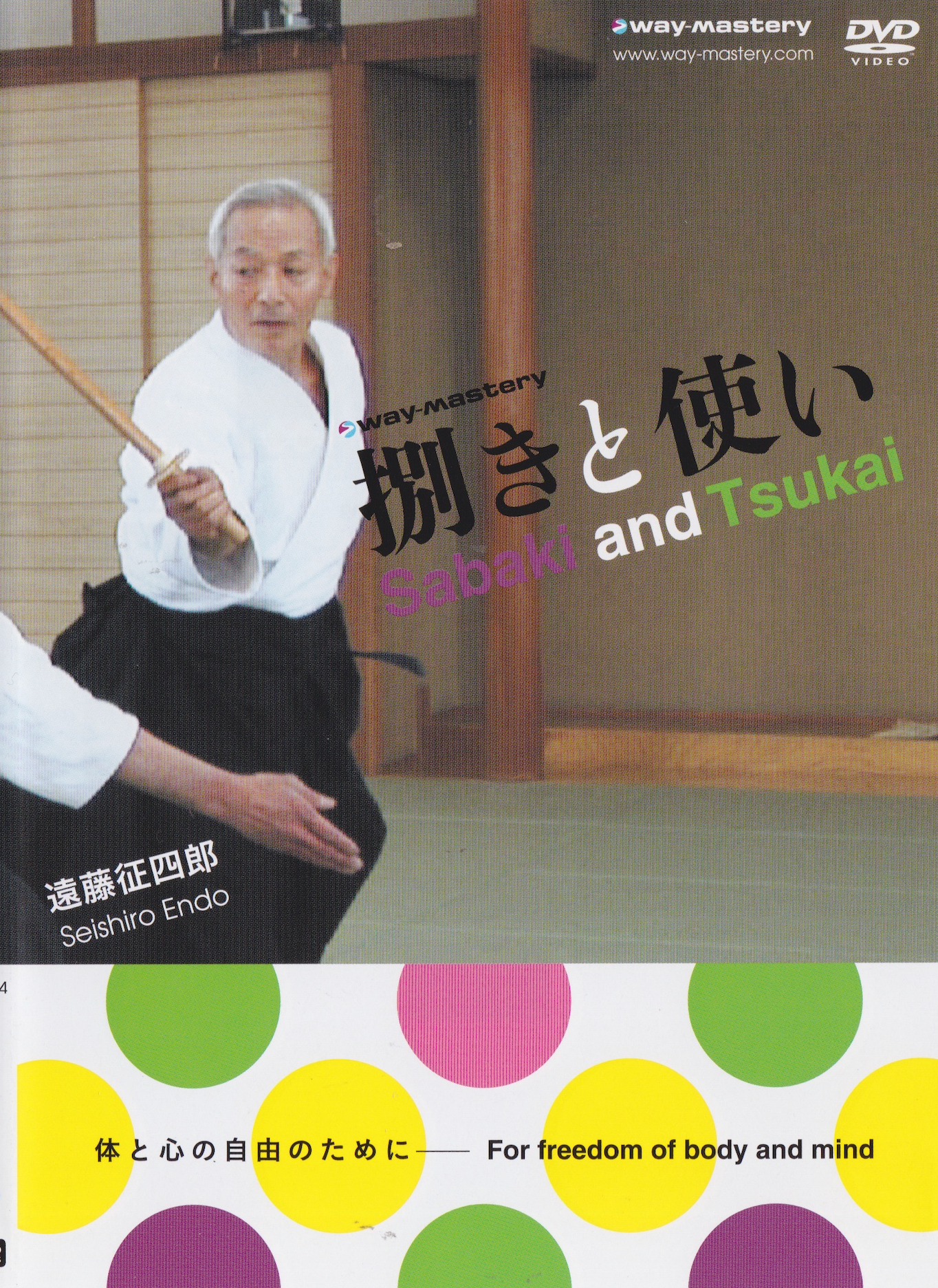
Sabaki and Tsukai DVD with Seishiro Endo (Preowned)
For freedom of body and mind.
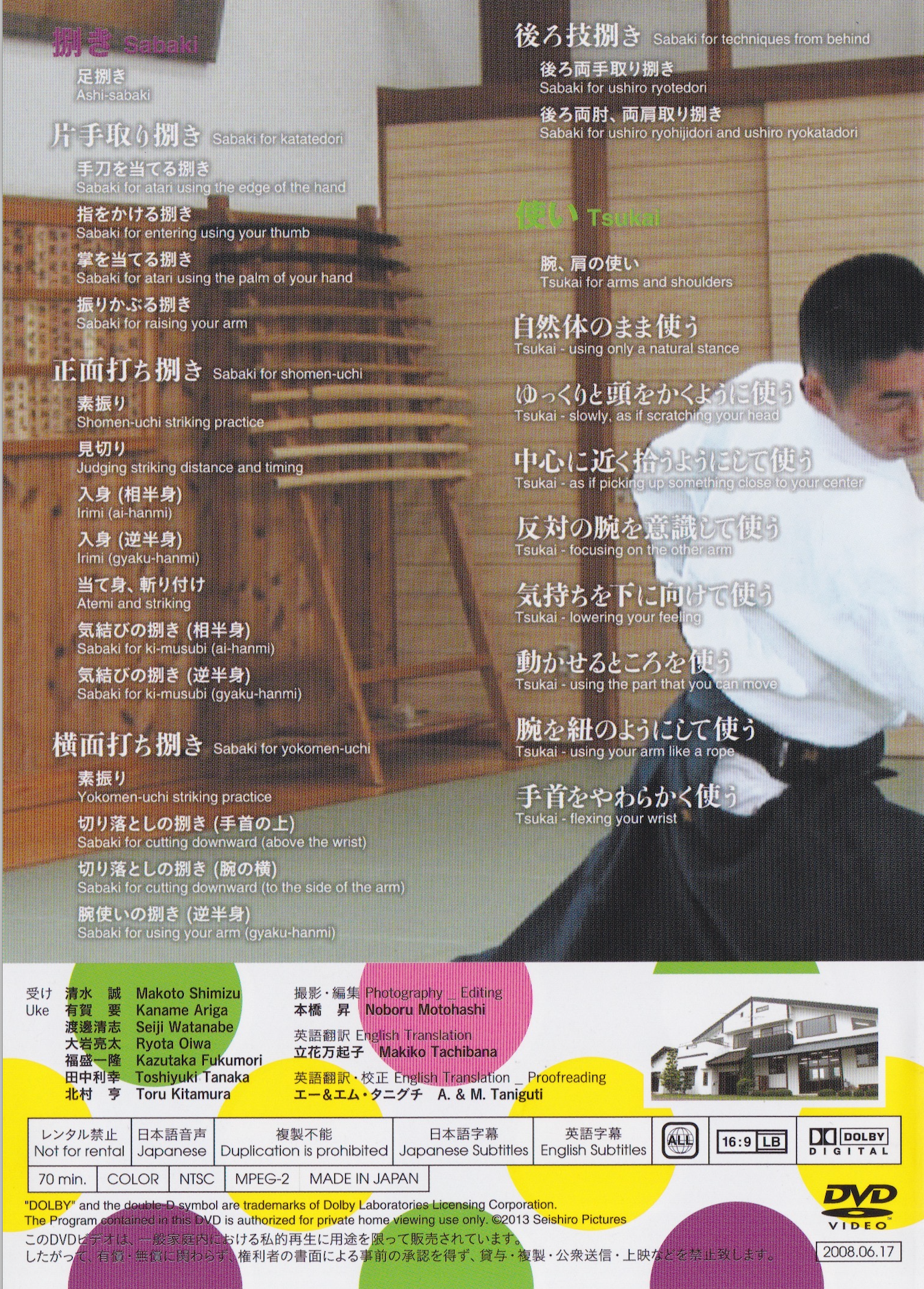
SABAKI
Ashi sabaki
Sabaki for Katatedori
Sabaki for atari using the edge of the hand
Sabaki for entering using your thumb
Sabaki for atari using the palm of your hand
Sabaki for raising your arm
Sabakii for shomen-uchi
Shomen-uchi, striking practice
Judging striking distance and timing
Irimi (ai-hanmi)
Irimi (gyaku-hanmi)
Atemi and striking
Sabaki for ki-musubi (ai-hanmi)
Sabaki for ki-musubi (gyaku-hanmi)
Sabaki for yokomen uchi
Yokomen-uchi striking practice
Sabaki for cutting downward (above the wrist)
Sabaki for cutting downward (to the side of the arm)
Sabaki for using your arm (gyaku-hanmi)
Sabaki for techniques from behind
Sabaki for ushiro ryotedori
Sabaki for ushiro ryohijidori and ushiro ryokatadori
TSUKAI
Tsukai for arms and shoulders
Tsukai - using only a natural stance
Tsukai - slowly, as if scratching your head
Tsukai - as it picking up something close to your center
Tsukai - focusing on the other arm
Tsukai - lowering your feeling
Tsukai using the part that you can move
Tsukai - using your arm like a rope
Tsukai - flexing your wrist
About the Instructor:
Seishiro Endo, born in 1942 in Saku, Nagano Prefecture, is one of the most quietly influential teachers in modern Aikido and holds the rank of 8th dan Shihan in the Aikikai. He began training while a student at Gakushuin University and later lived and trained at Aikikai Hombu Dojo during the final years of Aikido’s founder, Morihei Ueshiba.
Early in his career Endo Sensei practiced powerfully, like many young instructors of his generation, but a serious shoulder injury in his thirties forced him to rethink how he moved and trained. That turning point led him toward a softer, more attentive style that emphasizes connection, sensitivity, and natural movement rather than strength or form alone. Known for his calm presence and precise feeling, he continues to teach at Hombu Dojo and Gakushuin University, runs Aikido Saku Dojo in his hometown, and travels internationally, influencing students with an approach that feels deeply personal, practical, and rooted in lived experience rather than theory.
Couldn't load pickup availability