

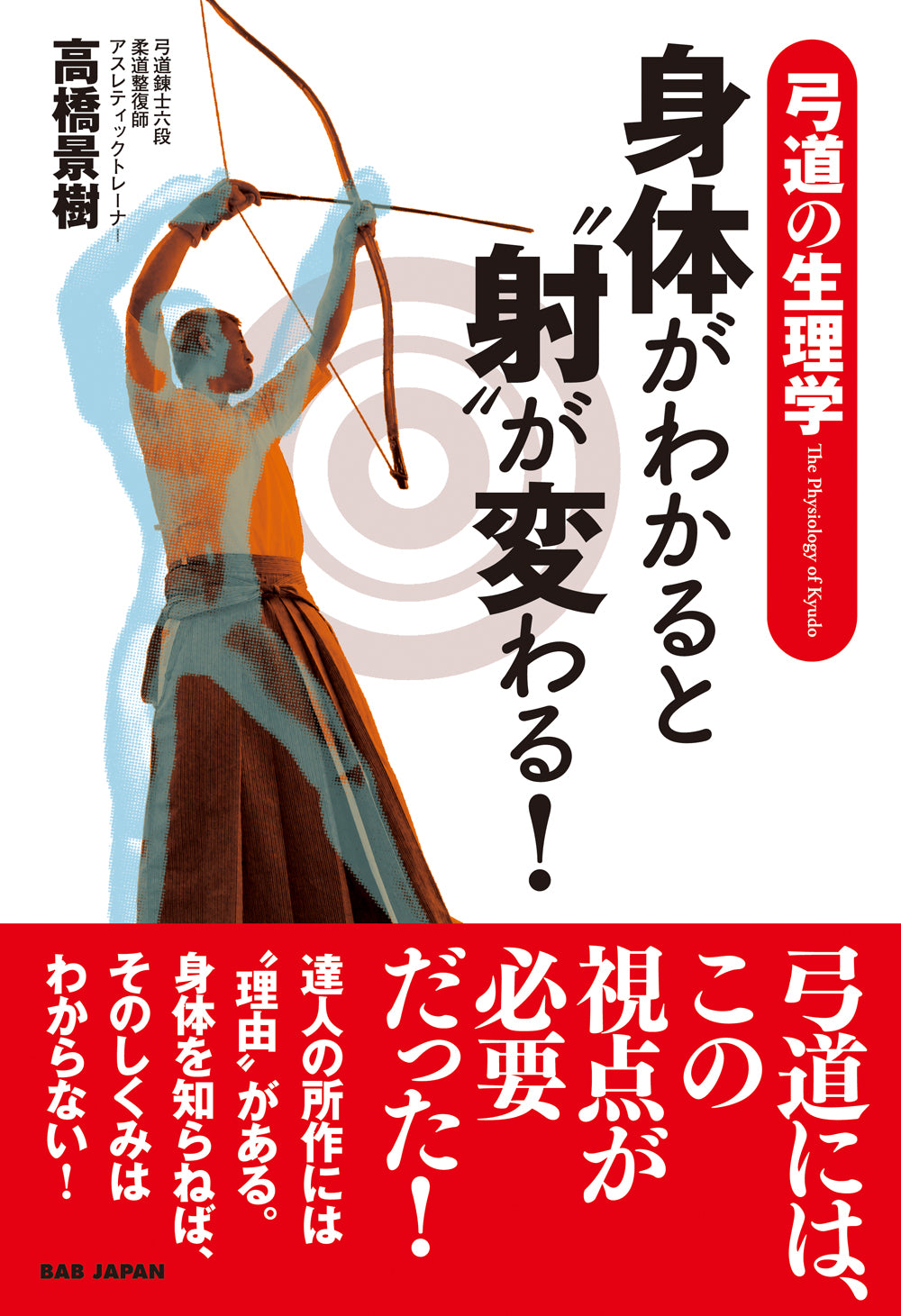
The Physiology of Kyudo: Understand Your Body & Your Shot Will Change Book by Keiju Takahashi
THIS IS A SPECIAL ORDER ITEM
These items can take approximately 1-2 weeks to arrive here before they are ready to be shipped out by the selected courier service. Special order items are not eligible for return or exchange under any circumstances. Please review product details carefully before adding these items to your shopping cart.
Please Note: If you place an order for other items, they will be held and shipped together with the special order item when it is available. Alternatively you can place separate orders so your regular items will be shipped sooner.
Kyudo Needed This Perspective!
There is a reason behind every movement of a master.
Without understanding the body, you cannot understand how those movements work.
At last, a body-care professional explains the science of the body specifically for Kyudo practitioners.
Improve your accuracy, the quality of your shooting, and reduce physical strain through a better understanding of how the body works.
Among the many martial arts and sports, Kyudo has rarely been examined from the perspective of biomechanics and physical movement. Drawing on many years of teaching experience as well as professional expertise in physical care, the author presents a practical guide to body science specifically for Kyudo practitioners.
CONTENTS
Chapter 1: Is Your Kyudo on the Right Track?
- What is your goal?
- Are you training appropriately for your goal?
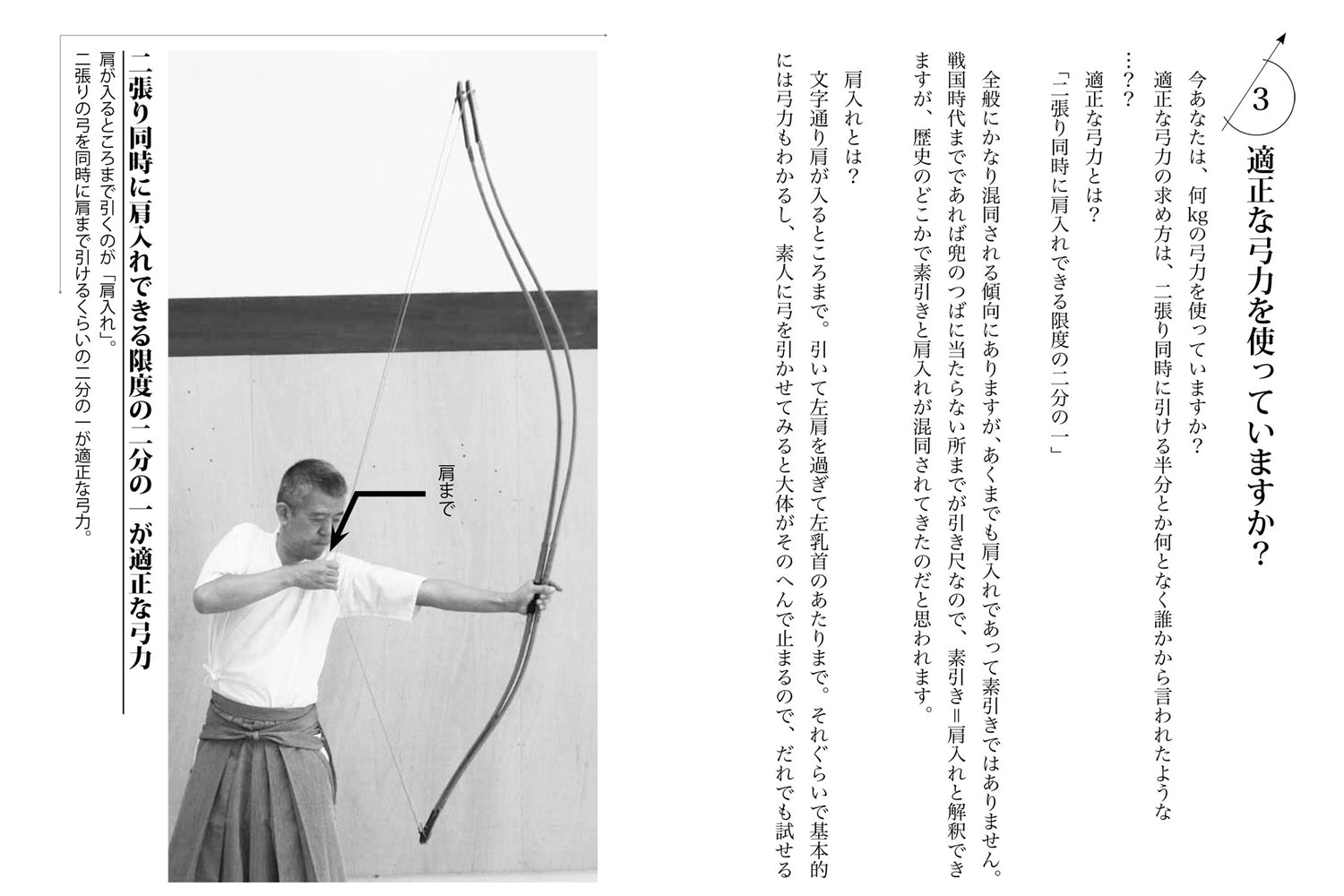
- Are you using the proper bow strength?
- Is average bow strength decreasing?
- “Tradition” as an excuse
- So, how should we move forward?
Chapter 2: Understanding Your Body
- The absolute basics of joints, bones, and muscles
- What the body is made of
- Differences between men and women
- Differences due to age
- Differences in skeletal structure and body type
- Differences in joint flexibility
- Taking an actual look at your own body
Chapter 3: The Eight Stages of Shooting and Body Movement
- What are the Eight Stages appropriate for your own body?
- What does it mean to produce movement?
- What constitutes failure, and what kinds of movements cause injury?
I. Ashibumi — Foot Placement
- Before Ashibumi: What does it mean to stand?
- Considering movements that commonly cause problems
- Considering the angle
- Common mistakes
- How to position the feet — one example
- Evaluating Ashibumi
- Muscles involved in Ashibumi — supplementary notes
II. Dozukuri — Forming the Torso
- Understanding what “stability” means
- What does it mean to settle the hips?
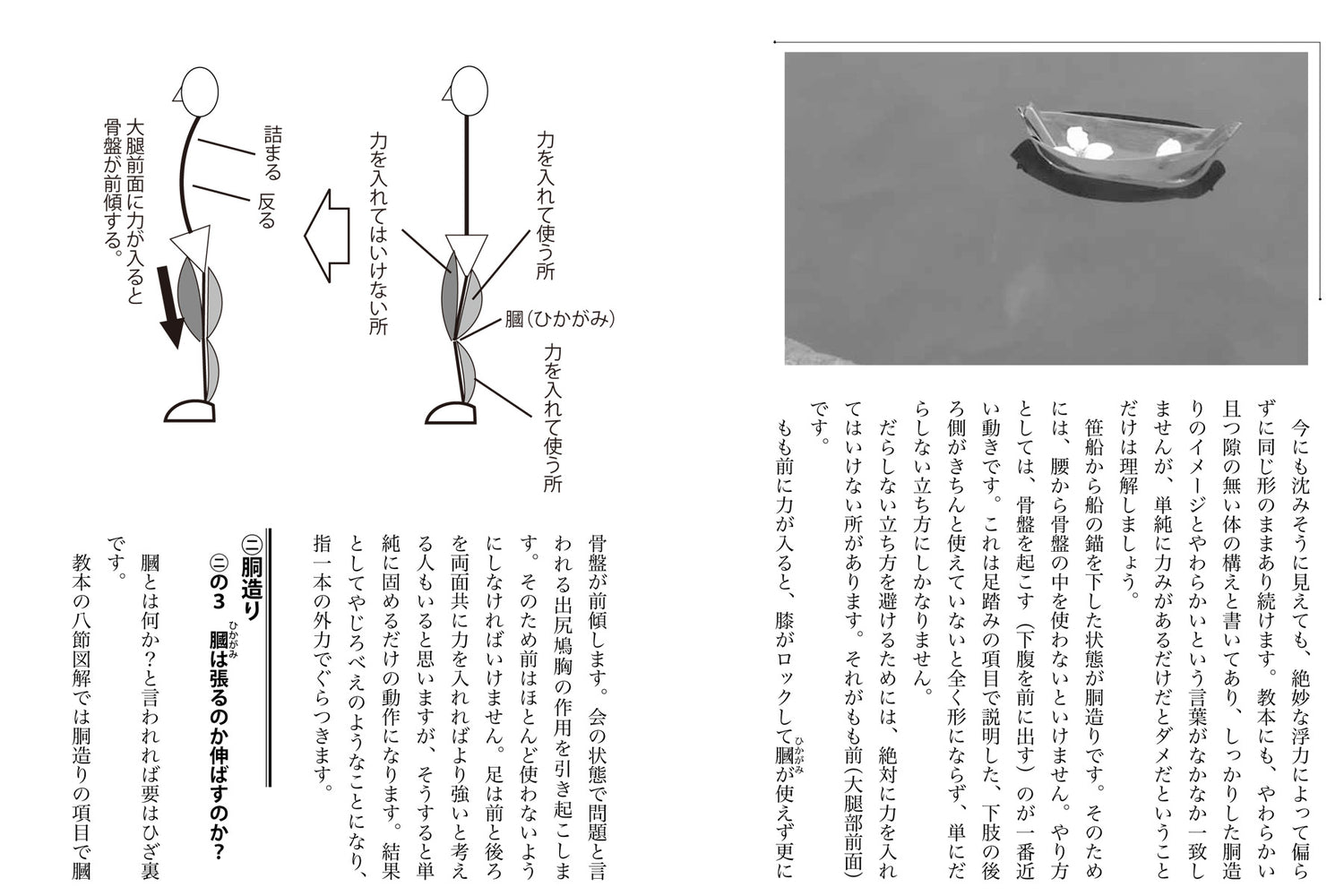
- Should the backs of the knees be tightened or extended?
- Should both shoulders be lowered?
- Straightening the spine and neck
- Placing the body’s center of gravity at the center of the hips and settling the mind and energy in the tanden
- Finding your own Chudo — examining Dozukuri from another perspective
- Checking your Dozukuri
- Muscles involved in Dozukuri — supplementary notes
III. Yugamae — Preparing the Bow
- Torikake — setting the draw hand
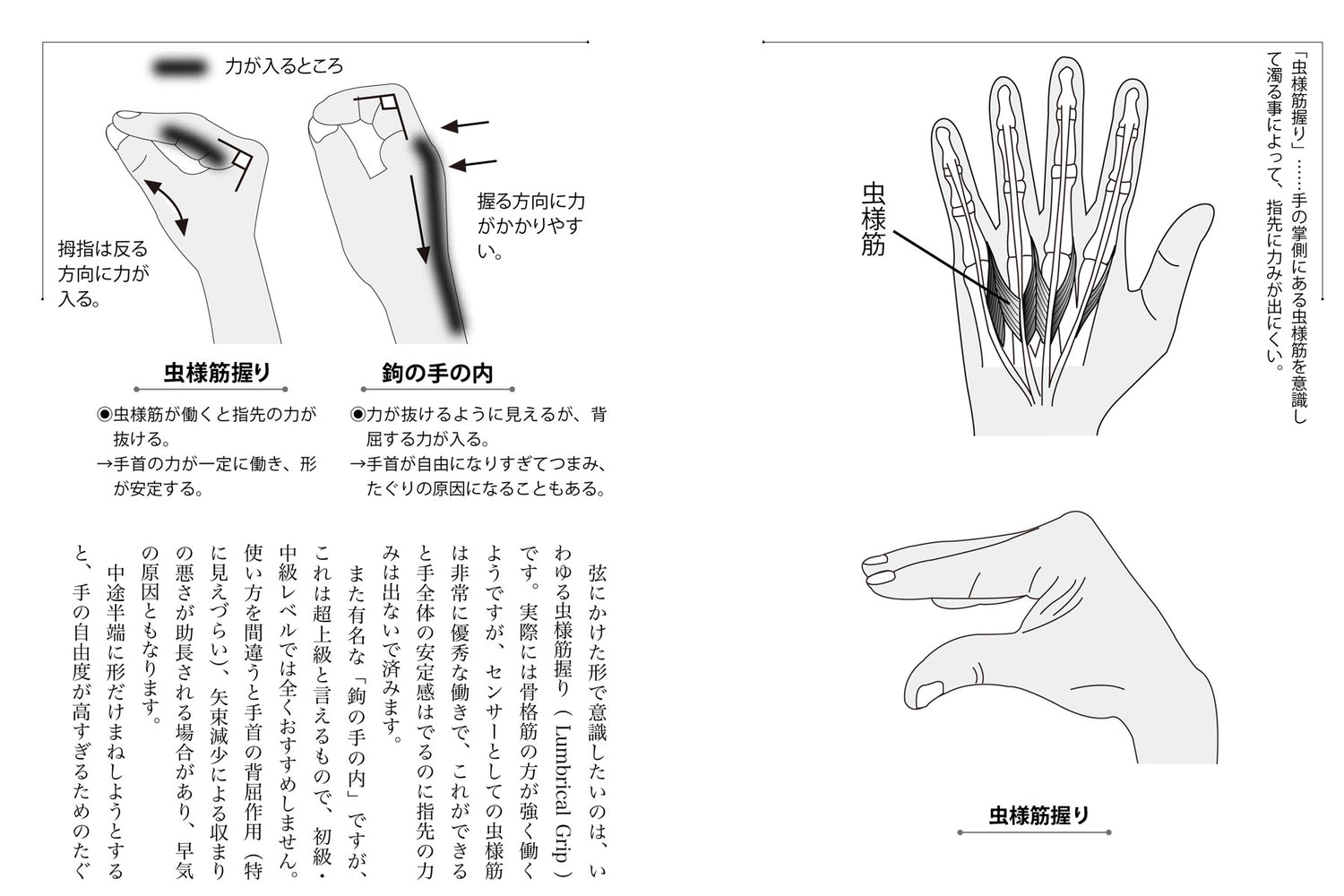
- Tenouchi — the grip
- Habiki — the preliminary opening
- Monomi — setting the gaze
- Muscles involved in Yugamae — supplementary notes
IV. Uchiokoshi — Raising the Bow
- The first “zero position”
- How to raise the bow
- What parts of the body should be used?
- Muscles involved in Uchiokoshi — supplementary notes
V. Hikiwake — Drawing the Bow: Transition of Movement and Balance of Power
- Ukewatashi — transition into the draw
- Daisan and elbow power — the second “zero position”
- Hikiwake — the draw itself
- Muscles involved in Hikiwake — supplementary notes
VI. Kai — The Full Draw: Deliberate Action to Eliminate Deliberate Action
- Tsumeai — establishing the full draw
- Nobiai — continuous expansion
- Aiming
VII. Hanare — Release: Transmitting Power to the Arrow
- Ichimonji no Hanare — the straight-line release
- Muscles involved in Hanare — supplementary notes
VIII. Zanshin (Zanshin/Zanshin as Remaining Body) — Inside and Out
Chapter 4: Body Care and Training
- What is body care?
- What is training?
- Are body care and physical training necessary for Kyudo?
- Practice drawing and Makiwara practice
- Warming up — preparing the body for movement
- Training
- How to structure your training — basic principles
- Cooling down
About the Author
Keiju Takahashi
Director of Keiju Osteopathic Clinic. Coach of the Kyudo Club at The Jikei University School of Medicine. Part-time lecturer specializing in Kyudo in the Department of Martial Arts Education, Faculty of Sport Culture, Nippon Sport Science University. Member of the All Nippon Kyudo Federation Medical and Science Committee. Medical and science support staff member for the Japanese Olympic Committee (JOC). Advisor to the Keishinkai martial arts research group.
Nationally licensed Judo Therapist (Judo Seifukushi); JSPO-certified Athletic Trainer; JSPO Para-Sports Trainer; Master’s degree in Physical Education/Sport Science.
Kyudo: Renshi, 6th Dan
Judo: 2nd Dan
Length: 200 pages
Language: Japanese
mbkju1
Couldn't load pickup availability